Sound familiar?Peninsular Park
- The call
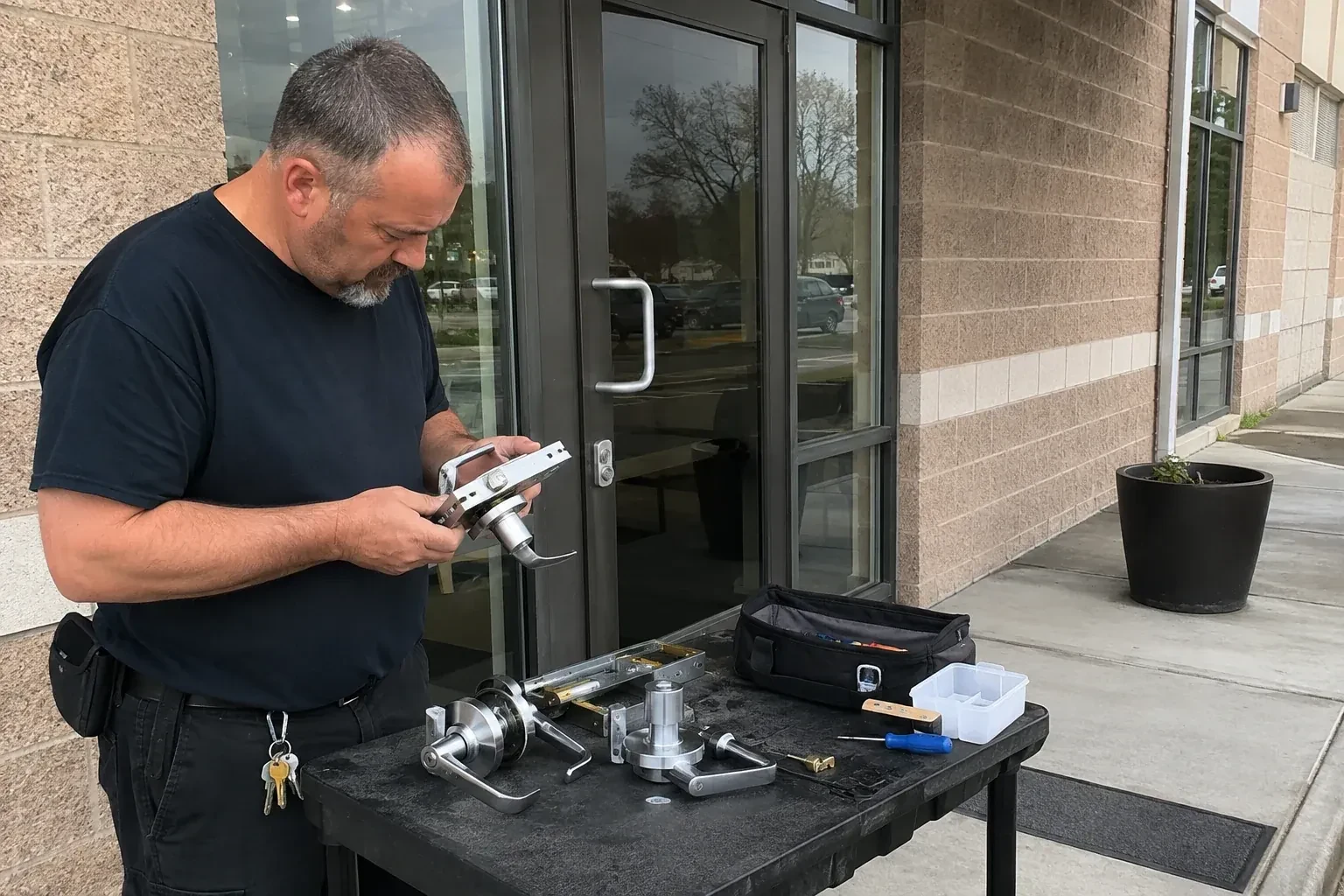
- The new access-control reader at the staff entrance works fine going in, but nobody has sorted out the door's exit side, and right now a card reader and a pushbar exist as two separate ideas.
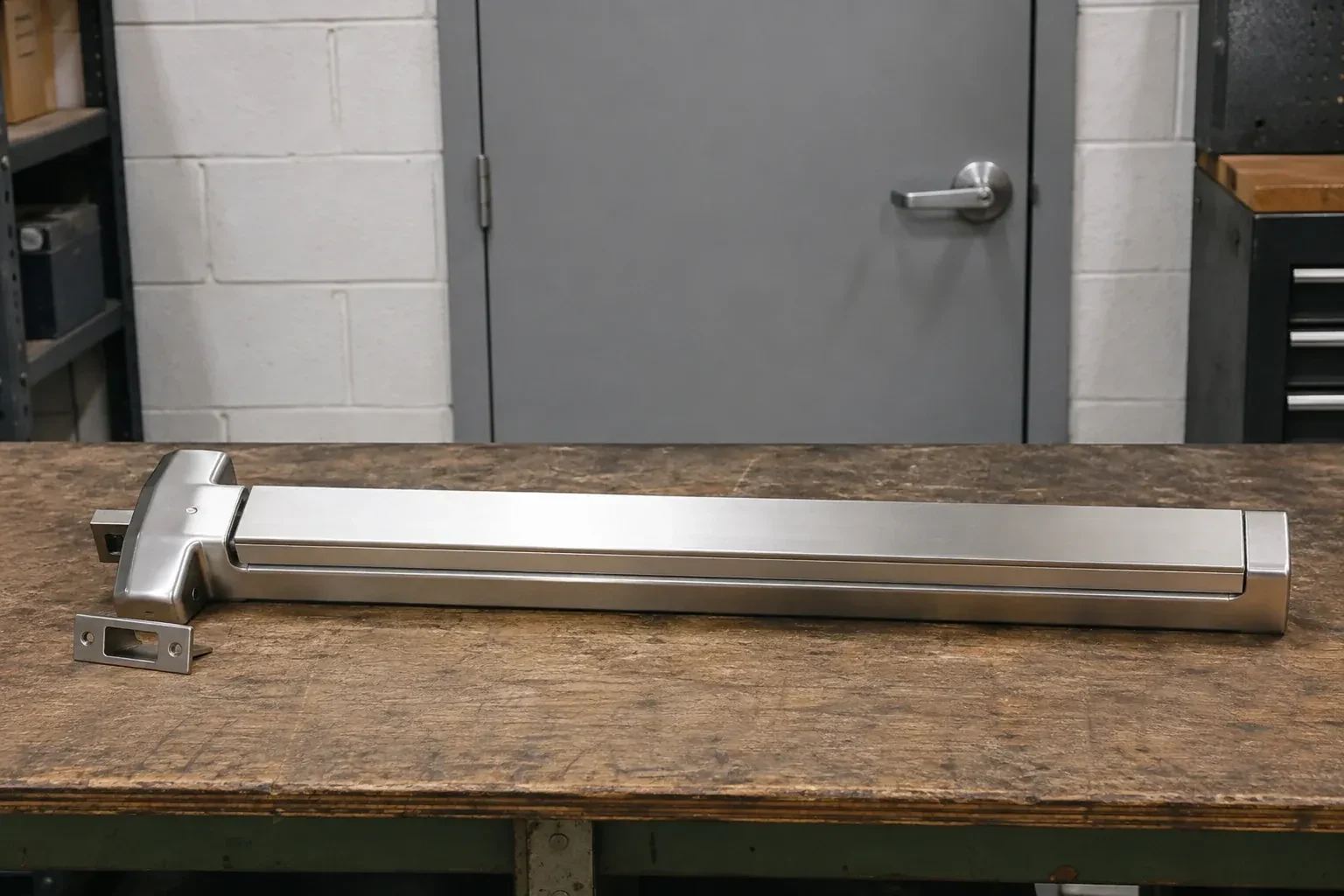
The crossbar on the loading-dock door barely returns anymore. Someone has to lean into it with a shoulder, and twice this month it has stuck half-latched, propped by whatever was nearest.
Sometimes the hardware is already there and simply needs honest attention. A crossbar that has stiffened, a dogging function that no longer holds, or a strike that has drifted out of line are common finds on a device that has been in service for years. The locksmith services what can be serviced, adjusts what has moved, and replaces only the parts that have genuinely worn out, so a functioning exit device is not swapped wholesale when a cleaning, an adjustment and new fasteners would restore it.
Sound familiar?Peninsular Park
Panic & Exit Hardware · Peninsular Park
Scene 1
Beyond the code question, the locksmith asks how people actually move through the door: whether it is propped open during business hours, whether deliveries come through it, whether staff dog it open for a shift and forget to release it afterward. These habits shape which options make sense, such as a keyed dogging cylinder that limits who can hold the door open, or an alarm module that tells staff the moment a door meant to stay closed has been used.
Scene 2
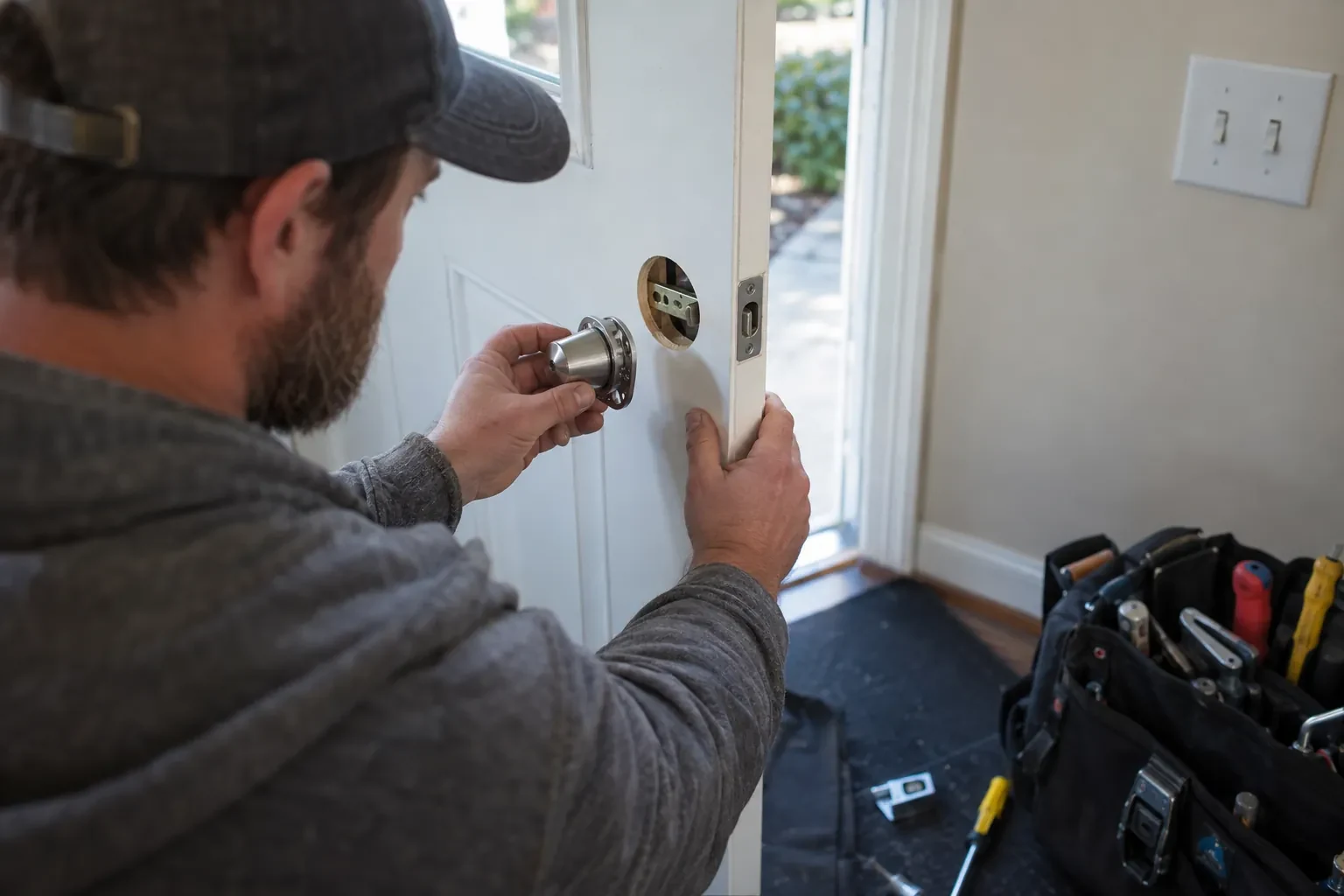
Once mounted, every device is cycled by hand repeatedly, checking that the touchpad or crossbar releases the latch under a light, even push and that the door swings clear of its frame and any threshold without binding. The strike is checked from both sides to confirm the latch seats fully when the door is pushed closed, not only when it is guided into place by hand. Any adjustment the testing reveals is made on the spot, before the device is called finished.
Scene 3
What the space has afterward is straightforward: anyone inside can leave through that door with a single push on the crossbar or touchpad, no key, no second step, no need to remember which way a lock turns. Staff can be shown the motion once and it stays intuitive, because that is exactly what the hardware is built to do. Outside, entry still works the way it was set up to, through the trim chosen for that door, entirely separate from the exit function inside.
What shapes the quoteBell Ewart Lock Services
FeesSame any hour
Panic hardware and fire exit hardware share the same push-to-release action, but fire exit hardware is additionally tested and listed for use on a fire-rated door assembly. That extra listing matters because a fire door has to keep an active latch bolt at all times; it cannot carry a mechanical dogging function the way ordinary panic hardware sometimes can, so the two are not interchangeable on a rated opening.
Fire door assemblies, including their exit hardware, are inspected and tested on a set schedule, and it is practical to check any exit device on the same rhythm even where the door is not fire-rated. A brief check for a stiff crossbar, a latch that no longer seats fully, or a strike that has drifted is enough to catch most wear before it becomes a callout.
Hardware standards set a maximum, not a target: an exit device is built to release the latch under a firm push, no more than about 15 pounds of force applied at the touchpad or crossbar, roughly the pressure of a light shove rather than a heave. That ceiling covers people who cannot lean hard into a door, so the swing stays open to anyone moving toward it under pressure.
SimcoeOntario
Panic & Exit Hardware · Innisfil, Bell Ewart, Big Bay Point, Cedar Harbour, Cookstown, Innisfil Park, Killarney Beach, Leonards Beach, Nantyr Park, Stroud, Alcona, Alderslea, Bear Point, Belle Air Beach, Big Cedar Point, Cedar Mount, Churchill, Crescent Harbour, De Grassi Point, Glenwood Beach, Lefroy, Mooselanka Beach, Sandy Cove, Tent City
Every square is one home in a hundred.
On-site assessment
The crossbar on the loading-dock door barely returns anymore.
(249) 315-0368, open 24/7.
On-site assessment preferred · (249) 315-0368, open 24/7