Skip to content
BellEwart Lock ServicesOpen 24/7 (249) 315-0368
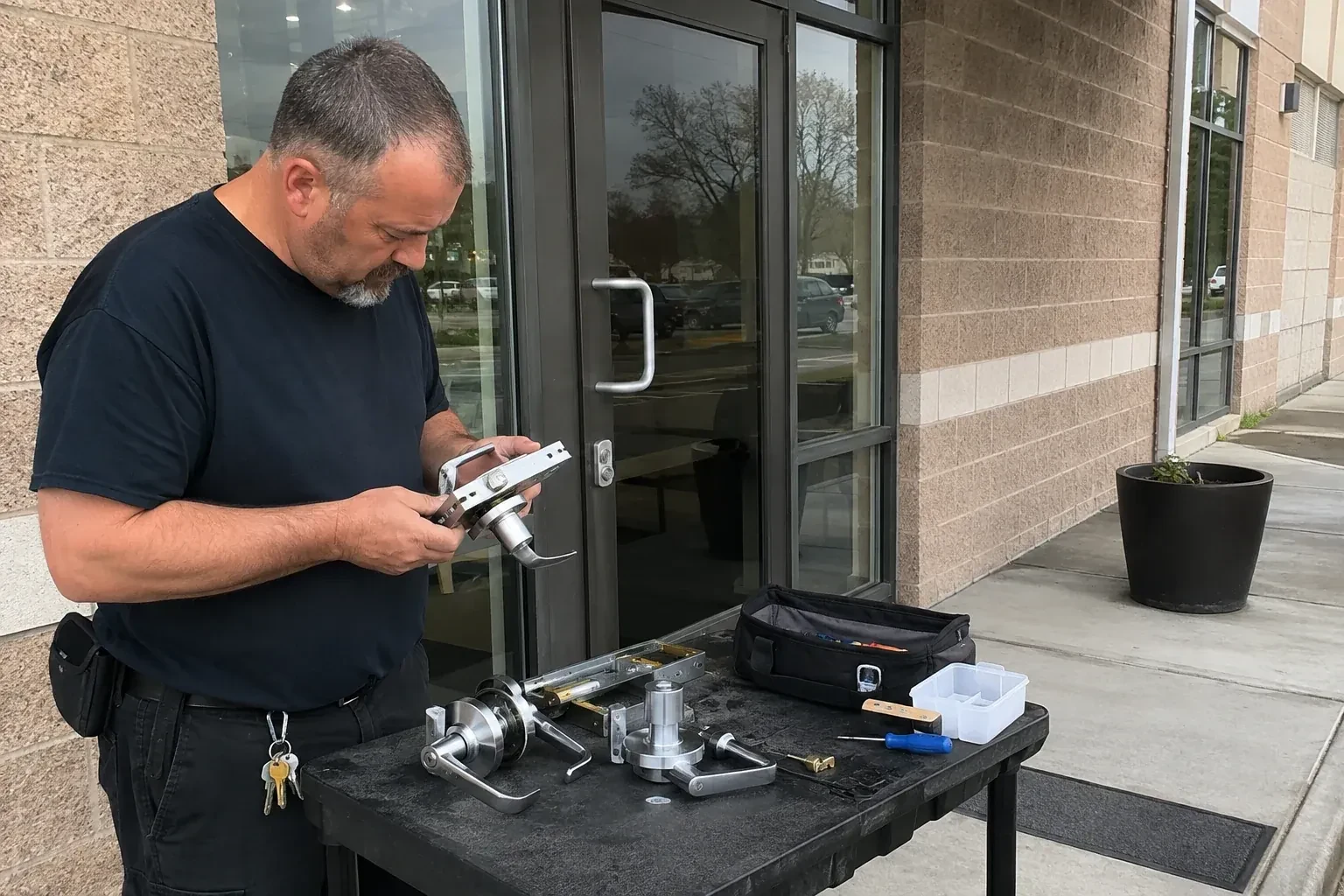
Person holding a door-handle and latch assembly at a worktable outside a glass entrance, with additional handles and tools laid out. — Commercial Rekeying, Big Bay Point

Commercial · Big Bay Point

Commercial Rekeying

A key turned up in the parking lot with the shop's name on its fob. It came back to you, which is lucky, but it means keys are leaving the building on rings you have never seen, and the shop's locks have not changed since opening day.

In plain words

A commercial rekey is planned around the trading day. The locksmith agrees a window, often after close or before opening, and works door by door so the premises is never left without a locking entrance. Cylinders come out, are repinned at a bench in the van or on a counter, and go back in; interchangeable cores are simply swapped for freshly combinated ones. Each door is tried with both new and old keys before the next is started. New keys go to whoever opens up in the morning, and a written chart of doors and key groups stays with the manager.

Sound familiar?Big Bay Point

The call
The manager's key ring went missing somewhere between the bank and the car, and the master on it opened every door in the building. Until the cylinders are changed, whoever finds it is holding the run of the place.
NextHow the visit goes

Commercial Rekeying · Big Bay Point

How the visit goes

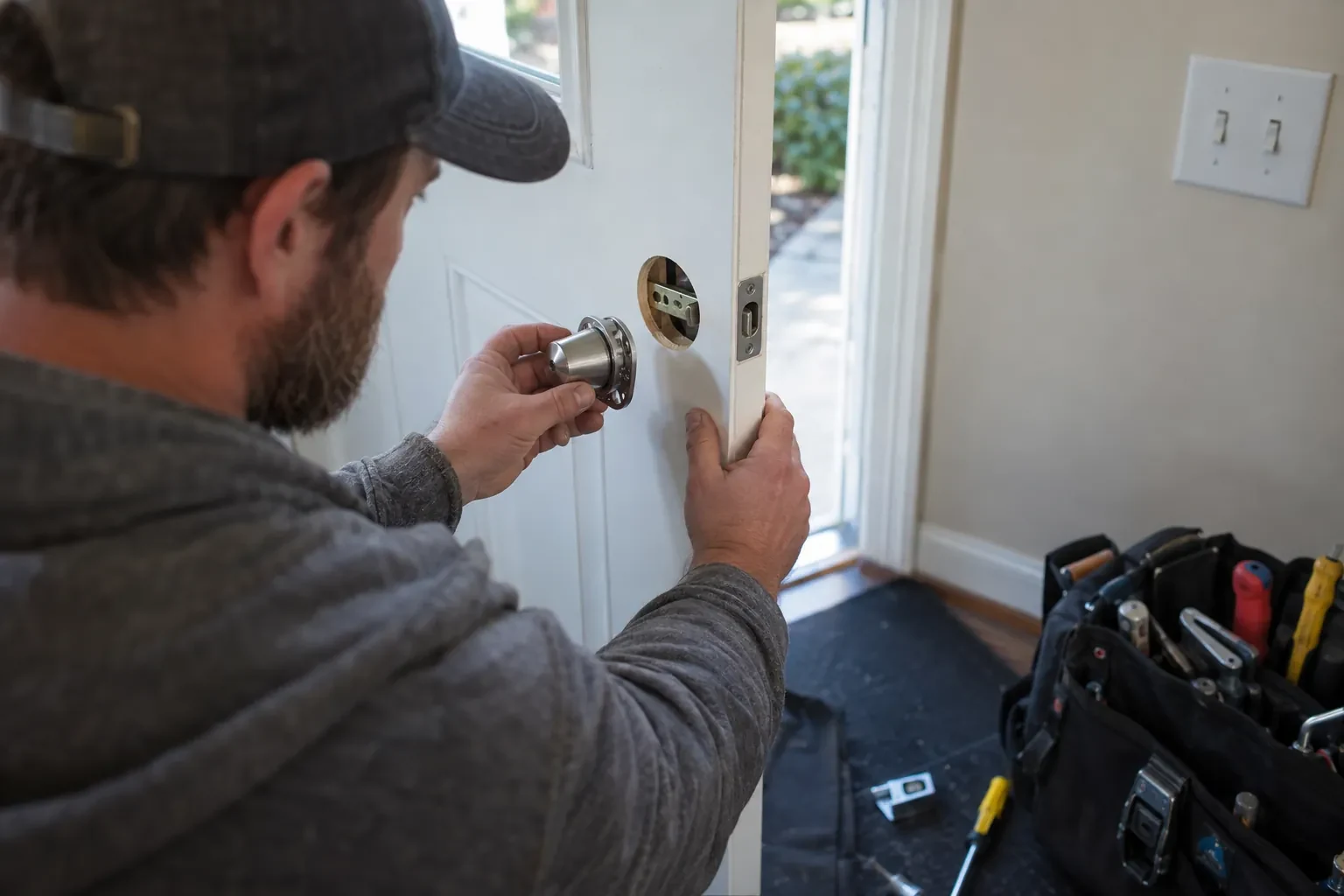
Illustrative locksmith scene — Big Bay Point
  1. Scene 1

    Who needs to open what

    The keying plan is a picture of how the business runs, so the assessment asks who goes through which door on a normal day. Front-line staff need the customer entrance and perhaps the stockroom; supervisors add the office; the owner and the bookkeeper hold the cash room; the IT contractor reaches the server closet and nothing else. Out of that conversation come the key groups: doors keyed alike so one key covers a role, doors keyed differently where separation matters, and whether a master for the owner earns its place. The plan also names anything left out on purpose, so the chart shows both what changes and what stays.

  2. Scene 2

    Repinning a standard cylinder

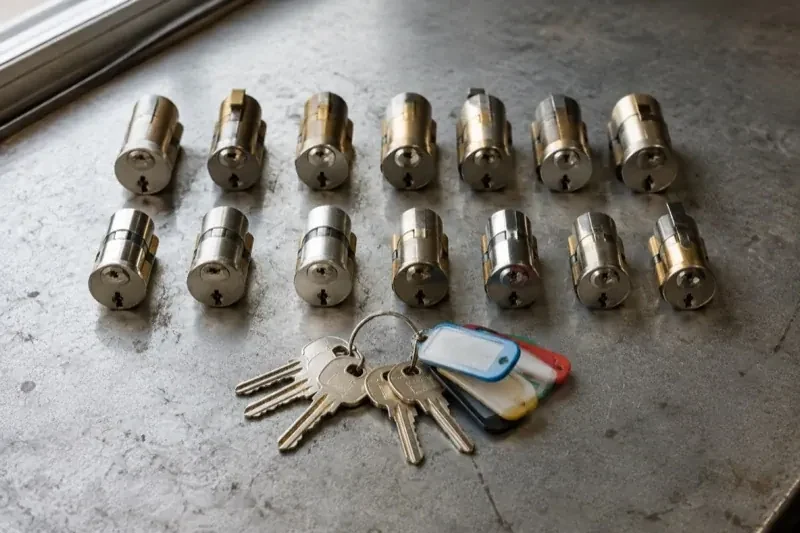
    The cylinder is taken off the door and its plug is slid out with a follower, a small tube that holds the top pins and springs in place so nothing scatters. The old bottom pins are tipped out, and a new combination is chosen from the pinning records so it does not collide with any other key in the plan. Fresh pins of the matching depths are dropped into each chamber, the plug goes back in, and the new key is tried: it should turn as smoothly as if the lock were new, and the old key should stop dead. The cylinder is then refitted and adjusted so the cam or tailpiece throws the bolt fully.

  3. Scene 3

    Keys counted into named hands

    Alongside the chart comes a key register: each key's stamped code, the person it was issued to, the date, and a line for the date it comes back. Filling it in as keys are handed out on the first morning takes ten minutes and pays off at every departure afterwards, because the question becomes 'return key A-07' rather than 'did she have a key?'. Spare keys are counted too and kept somewhere locked rather than in the drawer where the old tangle lived. When the register and the chart agree with the keys on the hook, the business knows exactly who can open it, which is the whole point of the exercise.

In the van

  • Interchangeable cores and control key
  • Key stamp set and tags
  • Standard and restricted key blanks
  • Mortise cylinder set screws and cams
  • Cylinder removal and spanner tools

What shapes the quoteBell Ewart Lock Services

No existing chart or keys
When nobody knows what the current keys open, the locksmith reads and records each cylinder before planning the new keying, and that reconstruction is time in the quote.
Doors out of alignment
A door whose cam, strike or closer needs adjusting so the freshly rekeyed cylinder throws the bolt fully is corrected during the visit, and that adjustment is a separate item.
Restricted keyway
Moving to a patented, restricted keyway means new cylinders or cores rather than a repin of the old ones, and the blanks themselves carry a higher price than standard keys.

FeesSame any hour

Have it ready

Before you call · 0 / 3

(249) 315-0368

Ask us anything about locks

What condition does a lock need to be in to be rekeyed?

It needs a plug that rotates without catching, pins that return under their springs, and a face free of heavy corrosion or cracks. Most commercial cylinders in daily use pass easily. Ones that are stiff, gritty or green with salt bloom can sometimes be cleaned and repinned, and the locksmith will say when a replacement for that door is the better value; the rest of the doors are rekeyed regardless.

We are a landlord with a tenant leaving. When should the unit be rekeyed?

Between tenants is the ideal moment: the departing tenant has handed back their keys, the new one has not yet received any, and the unit is empty for the work. The incoming tenant then starts on keys nobody else has held, and the landlord's own master or emergency key is set up at the same time. Where a lease has ended in dispute, the locksmith asks to see the paperwork before changing locks on a unit that still holds a tenant's goods.

Do I need my landlord's consent before rekeying my unit?

Read the lease, because that is where the answer lives. Commercial tenancies are governed mostly by the lease itself, and many leases require the tenant to tell the landlord when locks change, to provide a key for emergencies, or to use the landlord's approved locksmith. Doors on the building's master system, such as corridor or service doors, are normally the landlord's to change. Bring the lease to the assessment and the locksmith will sort the doors accordingly.

Big Bay Pointinformation

SimcoeOntario

Town
Big Bay Point, Simcoe
In business
24 years
Hours
Open 24/7
Nights, weekends and holidays, same fees
Visits
On-site assessment preferred. Request a visit or call.

2021 census: what it means at the door

Every square is one home in a hundred.

  • 35 in 100 homes · mixed ages
  • About 35% of homes in Innisfil were built in 1980 or earlier, according to the 2021 Census.Older frames and newer frames fail in different ways. Settled wood pulls strikes out of line; new framing settles as it dries. A locksmith used to a mixed area recognises which he is looking at and adjusts accordingly.
  • Single-detached houses make up about 90% of homes in Innisfil (2021 Census).A detached house gives a locksmith room to work: full access to both sides of every door, hinges and frames included. Repairs and upgrades can be thorough, from the front deadbolt to the gate latch, with nothing off limits.

Source: Statistics Canada, Census Profile

Open Big Bay Point in Google Maps

On-site assessment

Request a visit.

A key turned up in the parking lot with the shop's name on its fob.

(249) 315-0368, open 24/7.