Skip to content
BellEwart Lock ServicesOpen 24/7 (249) 315-0368
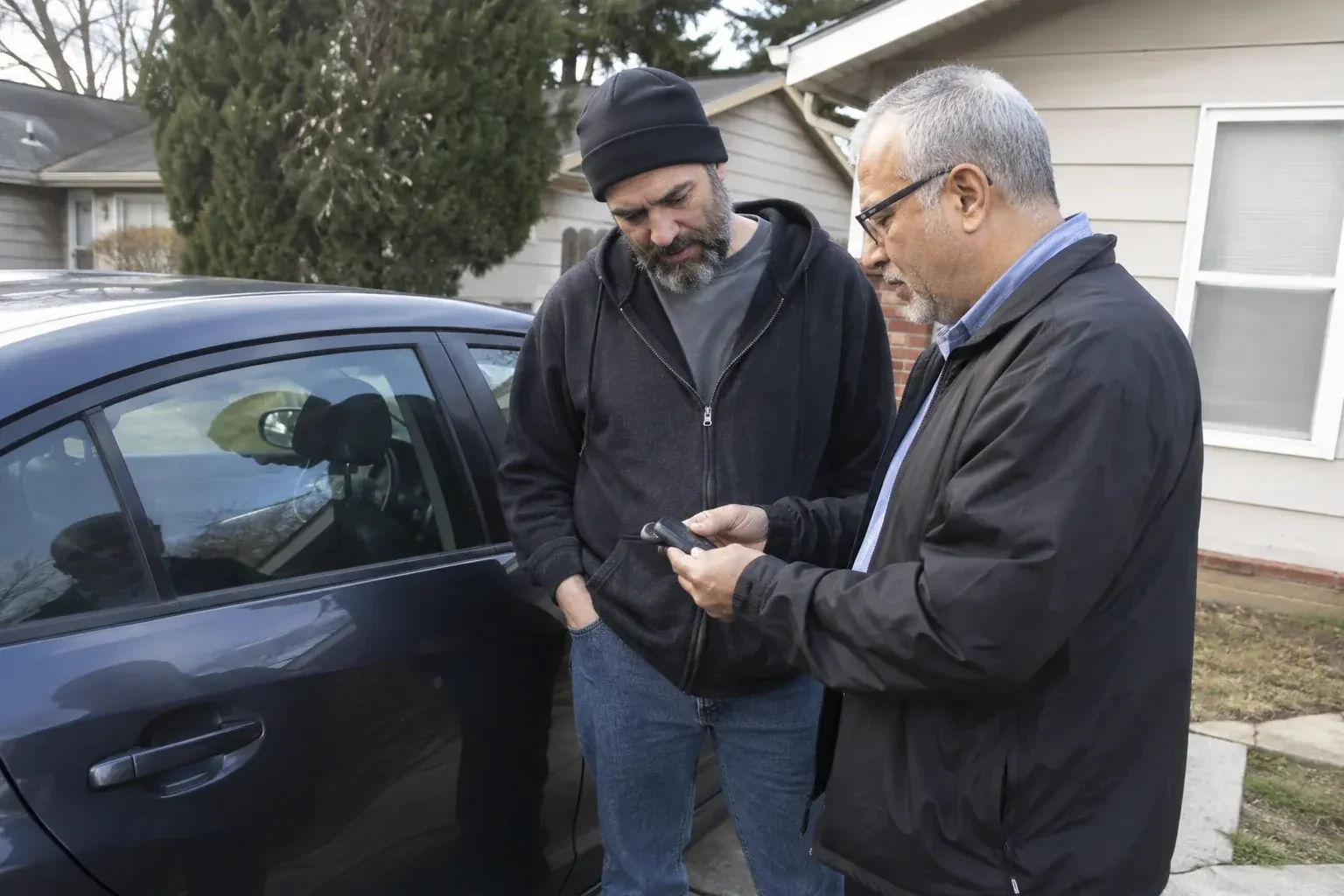
Two adults discussing a key fob beside a parked car. — Car Lockout Service, Crescent Harbour

Car keys · Crescent Harbour

Car Lockout Service

You reached the parking lot after a long hike and the pocket that held your car key is empty. Somewhere along ten kilometres of trail is the only key you own, and the car, your wallet and your dry clothes are all locked behind glass.

In plain words

Most car lockouts end with nothing to show that anyone was ever there. Purpose-made tools do the work a key or a finger would do from inside: an inflatable wedge opens a small gap at the top of the door frame, a padded reach tool presses the unlock button or lifts the handle, and door-edge guards keep paint and seals clean. Where a door cylinder exists, a pick-and-decoder made for that keyway turns it without marks. Coat hangers, screwdrivers and forced windows have no place in the process, and breaking glass is reserved for genuine emergencies where a life is at stake and responders are already on the way.

Sound familiar?Crescent Harbour

The call
You pressed the fob at the office door and nothing happened. Pressed again, held it, walked closer. The car sits dark and silent, the fob lights up but the doors stay locked, and the mechanical key you have never used is somewhere at home.
NextHow the visit goes

Car Lockout Service · Crescent Harbour

How the visit goes

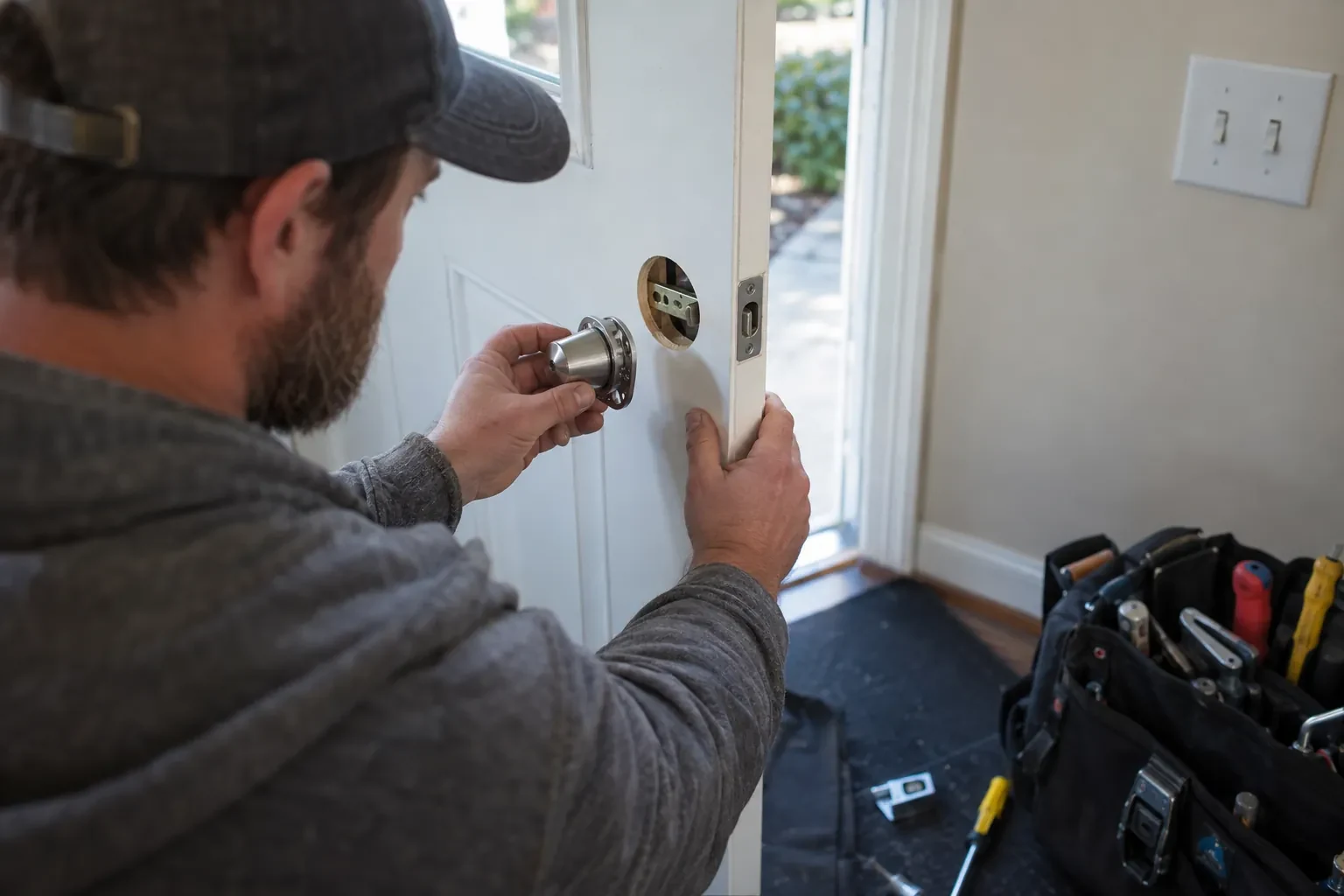
Illustrative locksmith scene — Crescent Harbour
  1. Scene 1

    Reading the make, model and year

    Cars from different decades open in different ways, so the vehicle's age and type are the next thing weighed. An older sedan with an exposed cylinder in every door is picked or decoded like a house lock. A newer car may have a single cylinder hidden under a small cap on the driver's handle, doors dense with wiring and airbag sensors, and an immobiliser that expects a recognised fob. Some vans and trucks use a separate cargo lock system. A locksmith who knows the model chooses between wedge-and-reach, a decoder pick matched to that keyway, or the mechanical cylinder before touching the car.

  2. Scene 2

    Silencing the alarm and finishing properly

    An opening often wakes the alarm, and quieting it is part of the job: a turn of the key in the door or ignition, or a press of the fob once the car has power, usually does it, and an aftermarket alarm is reset from its own valet switch. With the car quiet, the locksmith retrieves the keys, cycles every door and the trunk with both key and fob, checks that the window sits true in its seal and the door closes with the usual sound, and puts back any handle cap that was removed. You are shown what was done, and the car is locked and unlocked once more in front of you.

  3. Scene 3

    Keys in hand and a plan for the spare

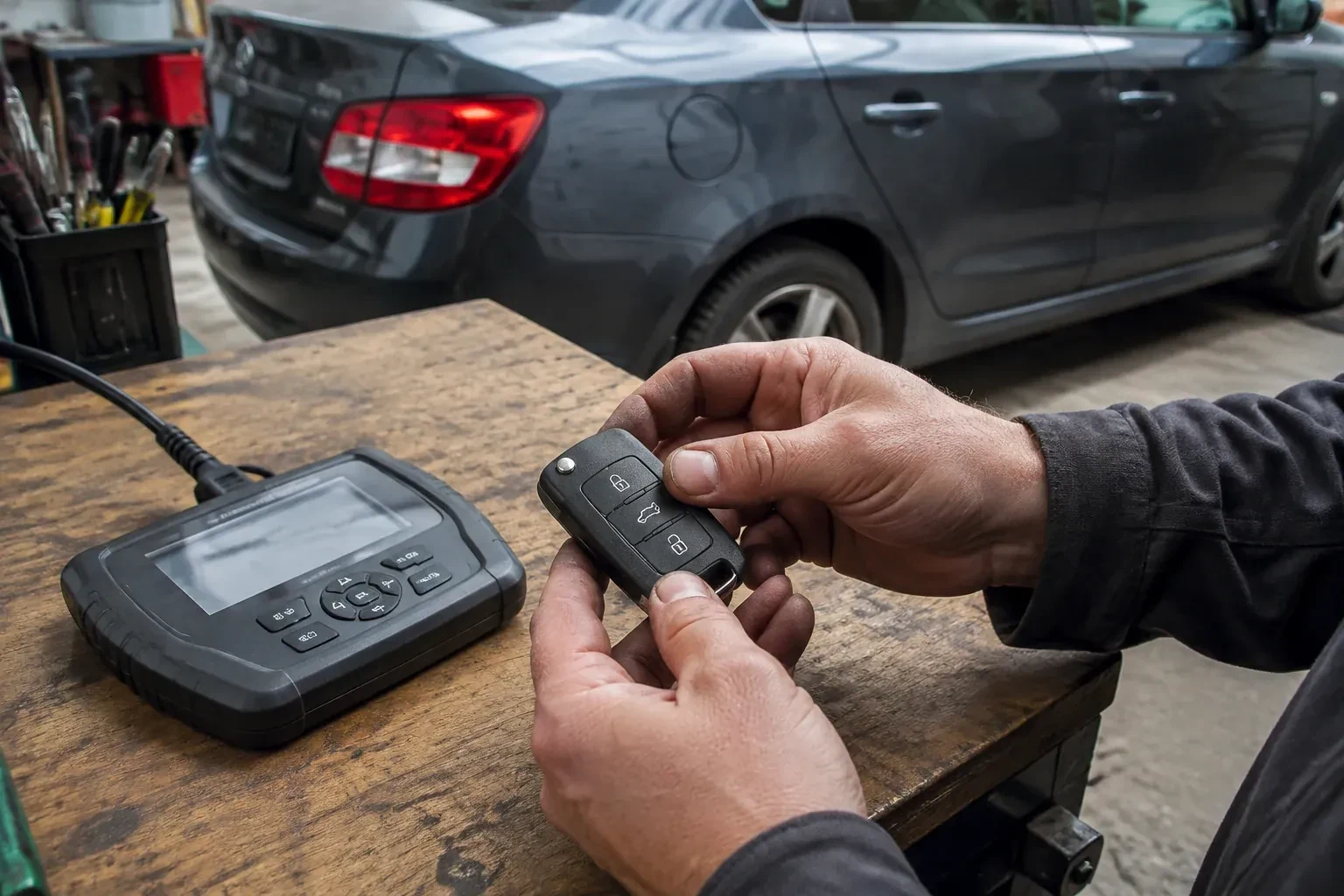
    Once the keys are back in your pocket, a minute on spares is well spent. A second key kept at home, with a family member or in a small lockbox at the house turns the next lockout into a phone call to someone you know. For a keyless car, the spare fob should be stored away from the car and away from the main fob, so a lost bag does not take both. If the vehicle came to you with a single key, the locksmith can cut and program a duplicate while the tools are out, and can show you how the mechanical blade hides inside the fob for the day the battery quits.

In the van

  • Broken key extractors
  • Transponder key blanks
  • Twelve-volt jump pack
  • Lock de-icer
  • Automotive pick and decoder

What shapes the quoteBell Ewart Lock Services

Dead fob or dead car battery
Replacing a fob coin cell is a small item. Jump-starting a flat twelve-volt battery so the immobiliser wakes is another, and each is named on the quote rather than folded in.
Aftermarket alarm or immobiliser
A car with an added alarm or a second immobiliser may need its own reset or bypass procedure once the door is open, and that extra step is priced as its own line.
Broken key extraction
Drawing a snapped blade out of a door or ignition cylinder before the opening, then cutting a fresh key from the pieces or the code, is quoted as work in addition to the entry.

FeesSame any hour

Have it ready

Before you call · 0 / 3

(249) 315-0368

Ask us anything about locks

How can I avoid locking myself out of the car again?

Make one habit stick: keys go into a pocket before any door closes. Keep a spare at home or with someone nearby, and store a spare fob away from the main one. Change your fob battery every autumn before the cold arrives. If your car offers a setting that stops the doors locking with the fob inside, turn it on. Keep a photo of your vehicle permit on your phone so identification is never behind glass.

The key broke off in the door lock. Is that still a lockout call?

Yes, with one extra step. The broken piece is drawn out with extraction tools that grip it and pull straight, never pushed deeper, and then the door is opened normally. The cylinder is checked for worn wafers or salt and cleaned or lubricated, and the key itself is inspected too, since bending, wear or fatigue can snap a key even in a healthy cylinder. A new blade is cut from the two halves or from the code, because a worn copy would break again.

The whole car is dead, not just the fob. Can you still open it?

Yes. When the interior lights, horn and remote are all silent, the car's own twelve-volt battery has run flat, and the fob has nothing to talk to. The door is opened through the mechanical cylinder or with a wedge and reach tool; loose or corroded connections and other faults can look the same as a dead battery, so it is checked and confirmed safe before a jump pack brings the car back to life. If the battery will not hold a charge, you will know before the locksmith leaves.

Crescent Harbourinformation

SimcoeOntario

Town
Crescent Harbour, Simcoe
In business
24 years
Hours
Open 24/7
Nights, weekends and holidays, same fees
Visits
On-site assessment preferred. Request a visit or call.

2021 census: what it means at the door

Every square is one home in a hundred.

  • 35 in 100 homes · mixed ages
  • About 35% of homes in Innisfil were built in 1980 or earlier, according to the 2021 Census.In an area of varied housing ages, rekeying is the one job that fits every door. Old cylinders and new ones both take fresh pins, so a household moving into either kind of home can start with keys that nobody else holds.
  • Single-detached houses make up about 90% of homes in Innisfil (2021 Census).In areas of single houses, the door nobody watches is the side or back entry. It often has the weakest lock on the property. Fitting a proper deadbolt and a reinforced strike there is a modest job that closes the obvious gap.

Source: Statistics Canada, Census Profile

Open Crescent Harbour in Google Maps

On-site assessment

Request a visit.

You reached the parking lot after a long hike and the pocket that held your car key is empty.

(249) 315-0368, open 24/7.