Skip to content
BellEwart Lock ServicesOpen 24/7 (249) 315-0368
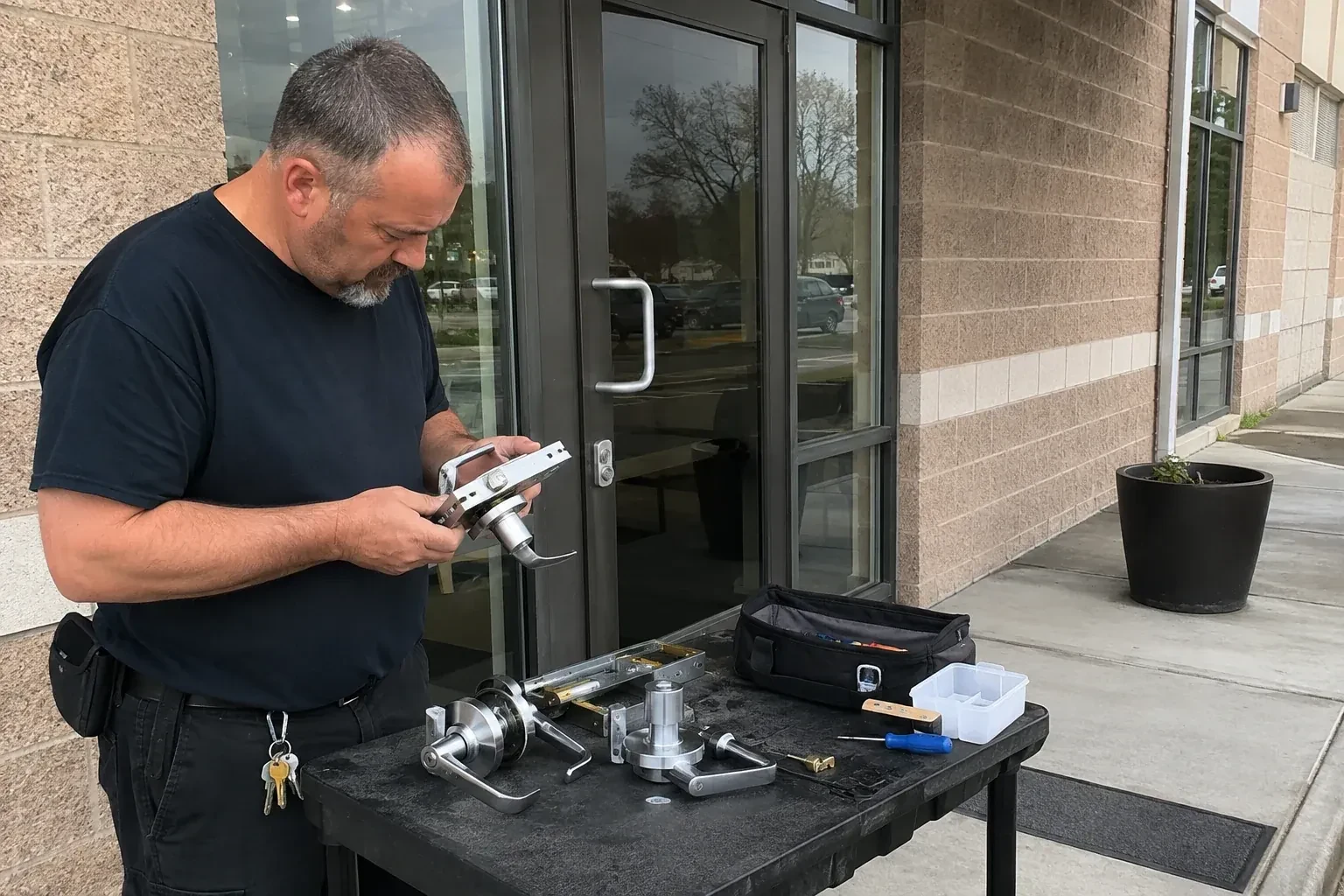
Person holding a door-handle and latch assembly at a worktable outside a glass entrance, with additional handles and tools laid out. — Commercial Rekeying, Crescent Harbour

Commercial · Crescent Harbour

Commercial Rekeying

A key turned up in the parking lot with the shop's name on its fob. It came back to you, which is lucky, but it means keys are leaving the building on rings you have never seen, and the shop's locks have not changed since opening day.

In plain words

Changing the locks answers today's question; key control keeps it answered. During a commercial rekey the new keys are stamped with a serial code rather than the business name or address, so a dropped key tells its finder nothing. Each key is logged against the person who receives it, and the old keys are collected and cut up on the spot. For premises that want copies kept out of hardware stores, the cylinders can be set up on a restricted keyway, with blanks released only against a signed authorization. What you end up with is a set of locks whose keys you can account for years later.

Sound familiar?Crescent Harbour

The call
The office has been reshuffled twice since the locks were last touched. Reception can open the server room, the warehouse crew has a key to accounting, and the chart that once explained who could open what has not been seen since the move.
NextHow the visit goes

Commercial Rekeying · Crescent Harbour

How the visit goes

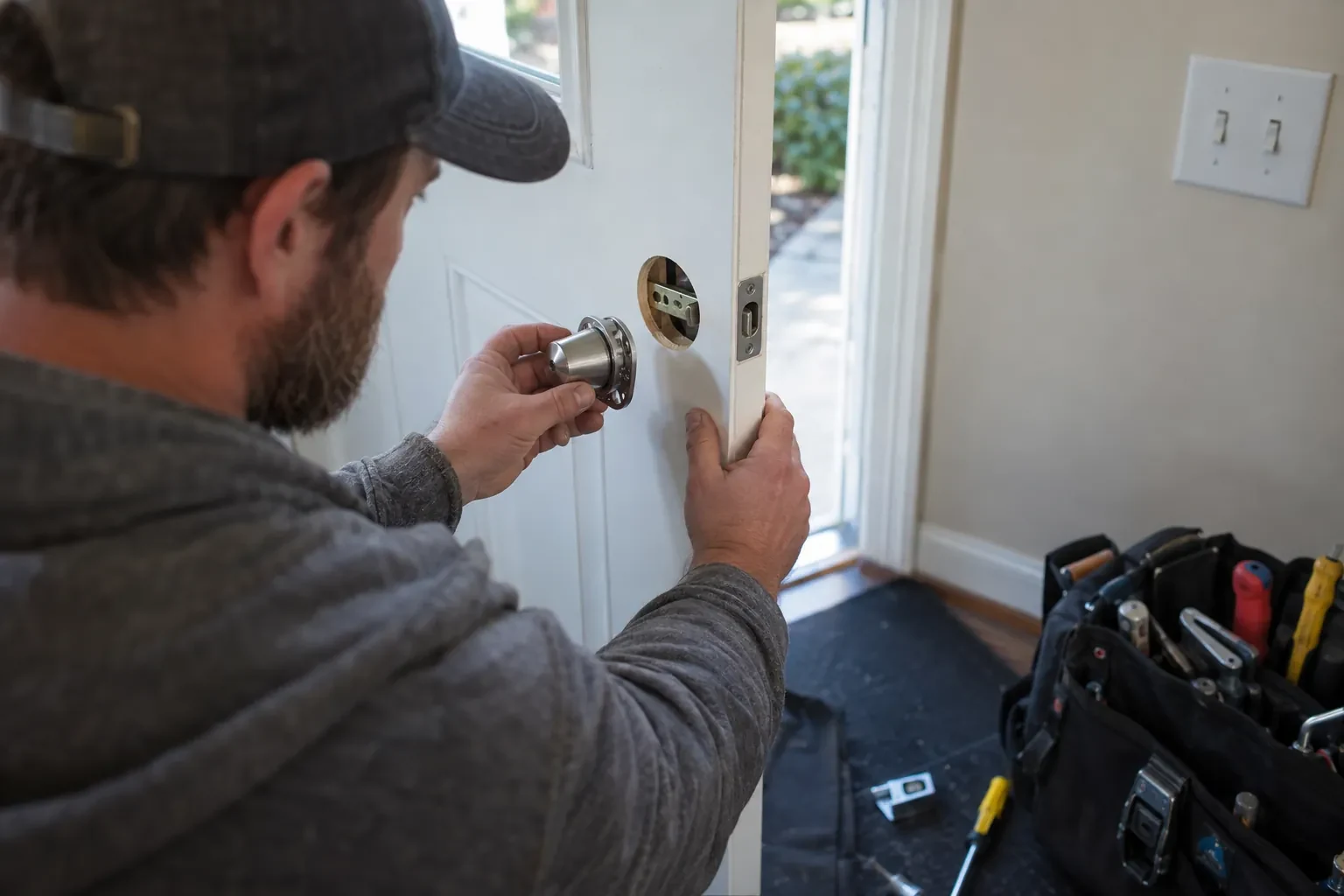
Illustrative locksmith scene — Crescent Harbour
  1. Scene 1

    Cores and restricted keys already on site

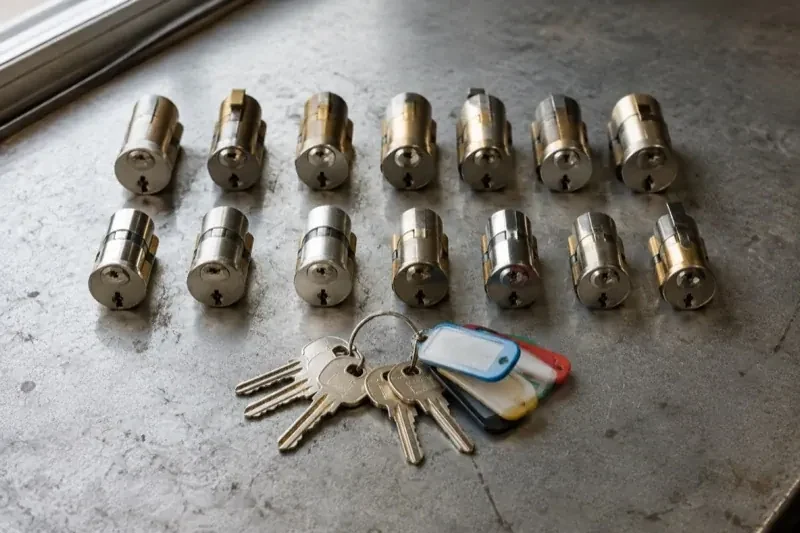
    Some businesses already have more key control than they realize. Figure-eight shaped cores in the levers point to an interchangeable core system, which means a control key somewhere removes the core without unscrewing anything; finding out who holds that control key, or whether it left with a former manager, shapes the whole job. Keys with an unusual profile or a stamped number may belong to a restricted keyway whose blanks are only supplied against a signed letter of authorization, and the locksmith asks who the signatories are. Knowing what is already in place lets the new plan build on it rather than replace it, and flags any control that has quietly lapsed.

  2. Scene 2

    Door by door, never a gap

    The sequence agreed at the assessment is followed on the day. The locksmith finishes one opening entirely before beginning the next: cylinder out, repinned, refitted, tested with both the new key and the old, and locked again. Only then does the next door come apart. The main entrance is usually left for last and done while someone from the business is present, so there is never a moment when the premises has a door that will not lock. Staff who are working during the visit are handed their new key before the door they use is changed, and a short note goes to anyone off shift about where to collect theirs.

  3. Scene 3

    How copies get made from now on

    If the business moved to a restricted keyway, the way keys are copied has changed for good. Hardware stores and kiosks do not stock the blanks, which makes running off a spare on a lunch break far harder to arrange. New keys are ordered from the locksmith by one of the people named on the authorization letter, who signs for them, and the register grows by exactly that many. On a standard keyway, the same discipline is kept by habit: the manager orders keys, the register records them and a key that turns up unlisted prompts a question. Either way the count on paper and the count in the world stay the same, which is what key control means.

In the van

  • Interchangeable cores and control key
  • Key stamp set and tags
  • Standard and restricted key blanks
  • Mortise cylinder set screws and cams
  • Cylinder removal and spanner tools

What shapes the quoteBell Ewart Lock Services

Restricted keyway
Moving to a patented, restricted keyway means new cylinders or cores rather than a repin of the old ones, and the blanks themselves carry a higher price than standard keys.
Padlocks, cabinets and mailboxes
Small locks add up. Each padlock repinned to the door key, each cabinet keyed alike and each mailbox cylinder replaced is listed on its own so you can decide what to include.
Several locations
Rekeying two or three sites onto one keying plan means travel between them and a chart that spans buildings, quoted per site plus the shared design work.

FeesSame any hour

Have it ready

Before you call · 0 / 3

(249) 315-0368

Ask us anything about locks

What condition does a lock need to be in to be rekeyed?

It needs a plug that rotates without catching, pins that return under their springs, and a face free of heavy corrosion or cracks. Most commercial cylinders in daily use pass easily. Ones that are stiff, gritty or green with salt bloom can sometimes be cleaned and repinned, and the locksmith will say when a replacement for that door is the better value; the rest of the doors are rekeyed regardless.

We are a landlord with a tenant leaving. When should the unit be rekeyed?

Between tenants is the ideal moment: the departing tenant has handed back their keys, the new one has not yet received any, and the unit is empty for the work. The incoming tenant then starts on keys nobody else has held, and the landlord's own master or emergency key is set up at the same time. Where a lease has ended in dispute, the locksmith asks to see the paperwork before changing locks on a unit that still holds a tenant's goods.

Do I need my landlord's consent before rekeying my unit?

Read the lease, because that is where the answer lives. Commercial tenancies are governed mostly by the lease itself, and many leases require the tenant to tell the landlord when locks change, to provide a key for emergencies, or to use the landlord's approved locksmith. Doors on the building's master system, such as corridor or service doors, are normally the landlord's to change. Bring the lease to the assessment and the locksmith will sort the doors accordingly.

Crescent Harbourinformation

SimcoeOntario

Town
Crescent Harbour, Simcoe
In business
24 years
Hours
Open 24/7
Nights, weekends and holidays, same fees
Visits
On-site assessment preferred. Request a visit or call.

2021 census: what it means at the door

Every square is one home in a hundred.

  • 35 in 100 homes · mixed ages
  • About 35% of homes in Innisfil were built in 1980 or earlier, according to the 2021 Census.In an area of varied housing ages, rekeying is the one job that fits every door. Old cylinders and new ones both take fresh pins, so a household moving into either kind of home can start with keys that nobody else holds.
  • Single-detached houses make up about 90% of homes in Innisfil (2021 Census).In areas of single houses, the door nobody watches is the side or back entry. It often has the weakest lock on the property. Fitting a proper deadbolt and a reinforced strike there is a modest job that closes the obvious gap.

Source: Statistics Canada, Census Profile

Open Crescent Harbour in Google Maps

On-site assessment

Request a visit.

A key turned up in the parking lot with the shop's name on its fob.

(249) 315-0368, open 24/7.