Skip to content
BellEwart Lock ServicesOpen 24/7 (249) 315-0368
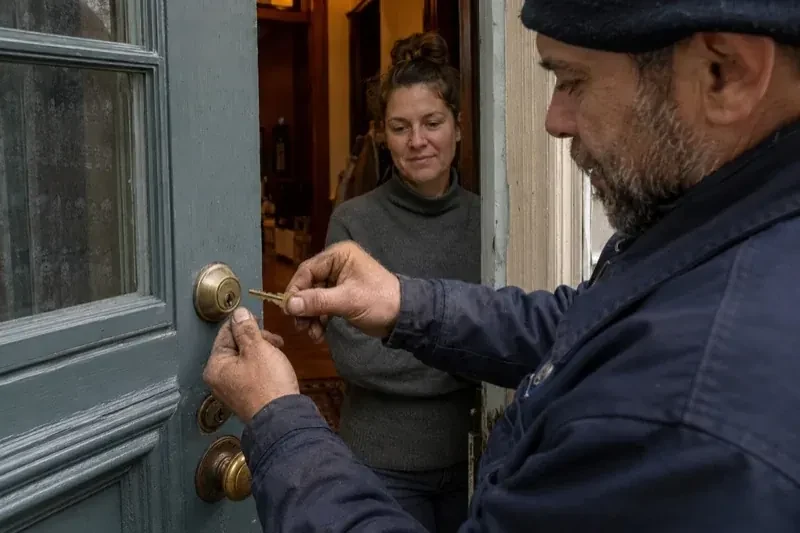
Person holding a key beside a brass-colored deadbolt on an open painted door while another person watches from inside. — Home Lockout Service, Crescent Harbour

Lockouts · Crescent Harbour

Home Lockout Service

You stepped out to grab the recycling bin and the door swung shut behind you. Through the glass you can see your keys hanging on the hook by the stairs, exactly where they always are, and the latch has caught.

In plain words

The visit follows a steady order. On the phone you describe the door, the lock and where the key went, which tells the locksmith what to bring. At the house, identification and address are checked and the lock is examined, including the door's fit in its frame. The opening itself comes next, using the least invasive technique that suits the hardware. Once inside, the lock is cycled several times to confirm it works, and you are told what was done. Any recommendation, such as rekeying because a key is missing, is explained then and carried out only if you want it.

Sound familiar?Crescent Harbour

The call
You reached the front step with the groceries, patted every pocket twice, and the house key is simply not there. It was on the ring this morning. Now the door is locked, the lights are off, and nothing you have on you opens it.
NextHow the visit goes

Home Lockout Service · Crescent Harbour

How the visit goes

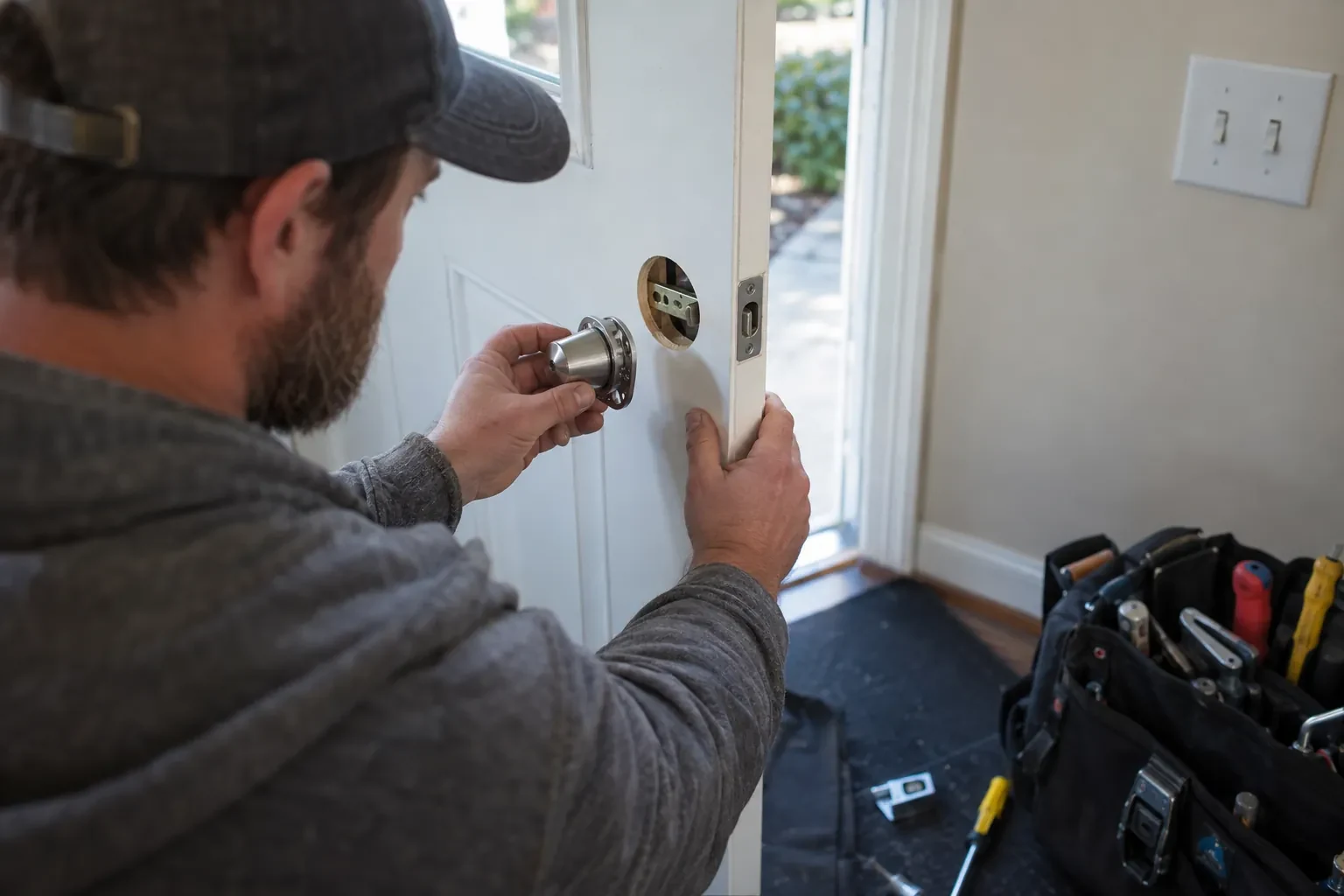
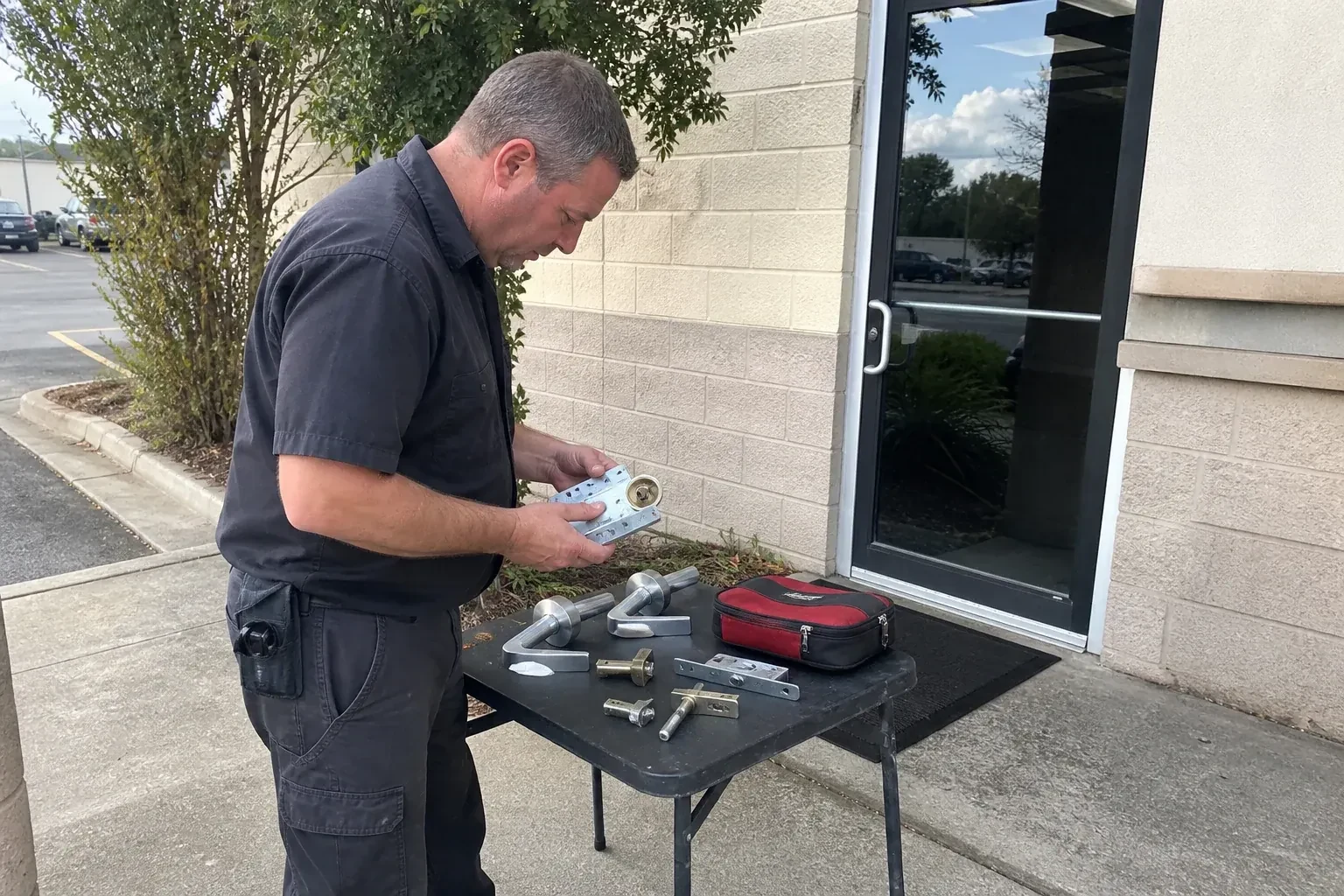
Illustrative locksmith scene — Crescent Harbour
  1. Scene 1

    Reading the lock itself

    Every lock announces what it is to someone who knows where to look. The shape of the keyway, the maker's mark on the face, the presence of a thumb-turn or a second keyed side, and whether the door has a separate deadbolt above a latching knob all tell the locksmith which family of hardware they are dealing with. A residential pin-tumbler cylinder, a mortise case in a century home, a restricted keyway with security pins and a keypad lock with a hidden override each respond to different techniques. Identifying the lock correctly before touching it is what makes a clean, non-destructive opening the usual outcome.

  2. Scene 2

    Getting past a dead smart lock

    A keypad lock that has lost power is usually opened by giving it power back. Many models expose two small terminals under the keypad that accept a fresh nine-volt battery held against them, which wakes the lock long enough to enter a code. If that route is unavailable, the locksmith removes the cover over the mechanical override and picks or decodes that small cylinder like a conventional lock. Where the lock has no keyway at all, that model's own recovery method is used instead. Afterwards, batteries are replaced, the door is confirmed to relock automatically if it should, and any forgotten code is reset from the inside.

  3. Scene 3

    Ready for the next cold snap

    After a winter lockout you leave with a cylinder that has been dried and dressed with a moisture-shedding lubricant, and usually a small tube of lock de-icer for the glove box or coat pocket. Keeping the storm door closed shields the main lock from freezing rain, and a simple keyhole cover on an exposed side door stops meltwater getting in during a thaw. If the door itself was frozen to its seal, the weatherstripping has been cleared and a light silicone wipe on it stops it bonding to the door again. These small habits carry most households through a whole season of freeze and thaw without another stuck morning.

In the van

  • Cylinder decoder
  • Lock de-icer
  • Replacement cylinder or deadbolt
  • Key blanks and key cutter
  • Dry graphite or PTFE lubricant

What shapes the quoteBell Ewart Lock Services

Type and grade of the lock
A builder-grade knob latch, a residential deadbolt, a mortise case in an older home and a high-security cylinder each take different tools and different amounts of time to open, and that difference shows in the quote.
Damage from earlier attempts
A latch bent by a credit card or a cylinder scarred by a screwdriver may need repair or replacement in addition to the opening. The locksmith points out what was already there before quoting that part.
Electronic lock work
A dead smart lock may need batteries, a reset, reprogramming of codes or pairing to your phone once the door is open. Each of those is a small task that the quote names separately.

FeesSame any hour

Have it ready

Before you call · 0 / 3

(249) 315-0368

Ask us anything about locks

What is the difference between rekeying and replacing a lock?

Rekeying keeps the lock you have and changes only the pins inside the cylinder so a new key operates it and the old one no longer does. It suits hardware that is in good shape and simply needs a fresh key. Replacing swaps the whole lock or cylinder for new hardware, which makes sense when the existing lock is worn, damaged, of low grade, or when you want a different style or a keypad. Either can be done during a lockout visit.

How should I look after my lock so it stays reliable?

A little attention twice a year is enough. Follow your lock's own care instructions: many take a puff of dry graphite or PTFE lubricant worked in with the key, some a specified liquid product instead; general-purpose oils collect grit. Retire keys that have worn thin and cut fresh ones from a crisp original or the code. Snug up hinge and strike screws each spring and fall as the door moves with the humidity. A key that starts needing a wiggle is an early warning worth acting on.

If my key is lost, will I leave with a working key?

Yes, one way or another. If you choose to rekey, the cylinder is set to a new combination and fresh keys are cut for it on the spot, usually two or three, and tested in each door they should open. If you prefer to keep the existing pinning, a new key can be cut to the lock's code or by decoding the cylinder. Either way you are not left relying on a key that is somewhere else.

Crescent Harbourinformation

SimcoeOntario

Town
Crescent Harbour, Simcoe
In business
24 years
Hours
Open 24/7
Nights, weekends and holidays, same fees
Visits
On-site assessment preferred. Request a visit or call.

2021 census: what it means at the door

Every square is one home in a hundred.

  • 35 in 100 homes · mixed ages
  • About 35% of homes in Innisfil were built in 1980 or earlier, according to the 2021 Census.In an area of varied housing ages, rekeying is the one job that fits every door. Old cylinders and new ones both take fresh pins, so a household moving into either kind of home can start with keys that nobody else holds.
  • Single-detached houses make up about 90% of homes in Innisfil (2021 Census).In areas of single houses, the door nobody watches is the side or back entry. It often has the weakest lock on the property. Fitting a proper deadbolt and a reinforced strike there is a modest job that closes the obvious gap.

Source: Statistics Canada, Census Profile

Open Crescent Harbour in Google Maps

On-site assessment

Request a visit.

You stepped out to grab the recycling bin and the door swung shut behind you.

(249) 315-0368, open 24/7.