Sound familiar?Crescent Harbour
- The call
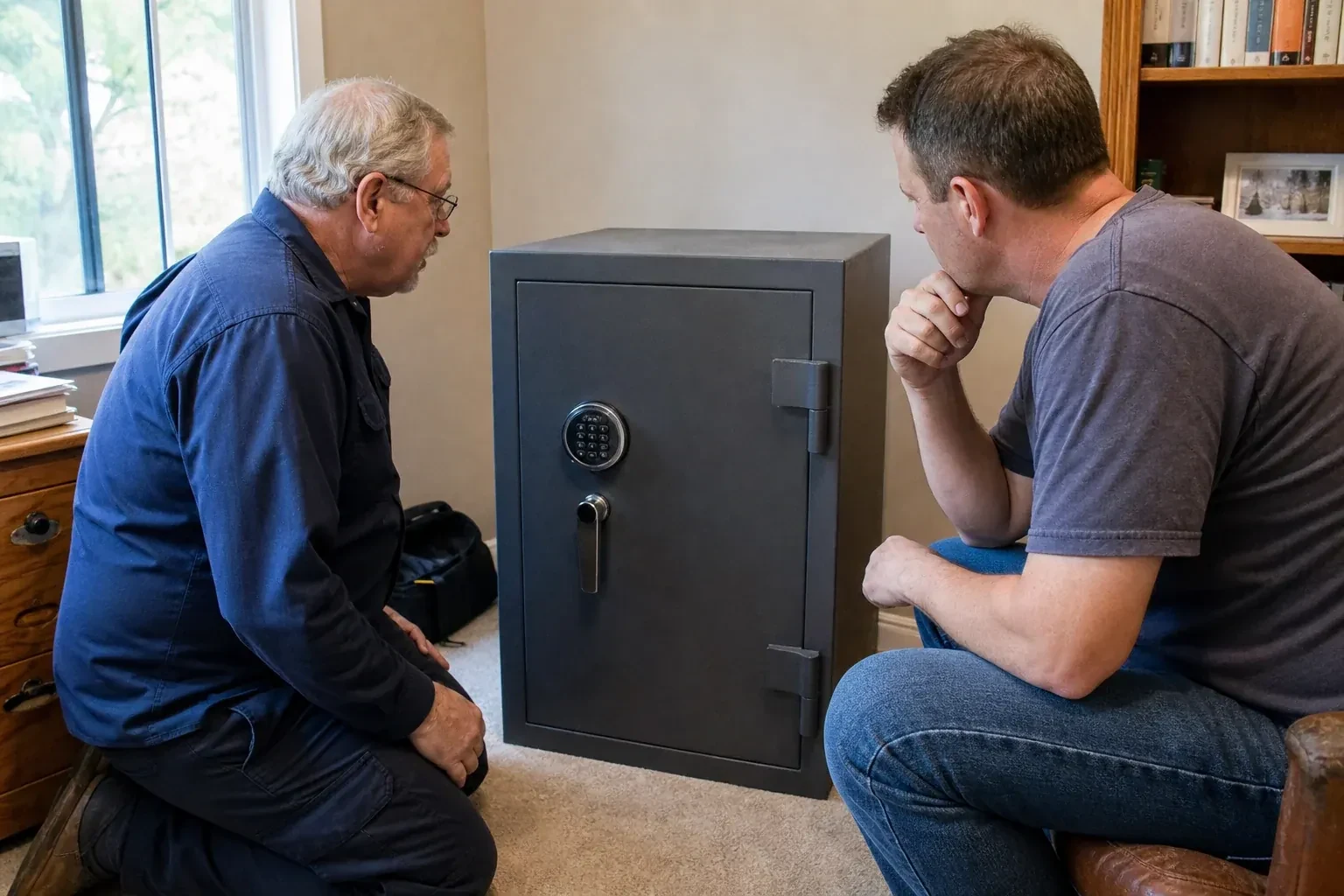
- The till drawer has been holding two days of cash because the new shop never got a proper safe, and a locked drawer under the counter is the only thing standing between that cash and anyone who works late.
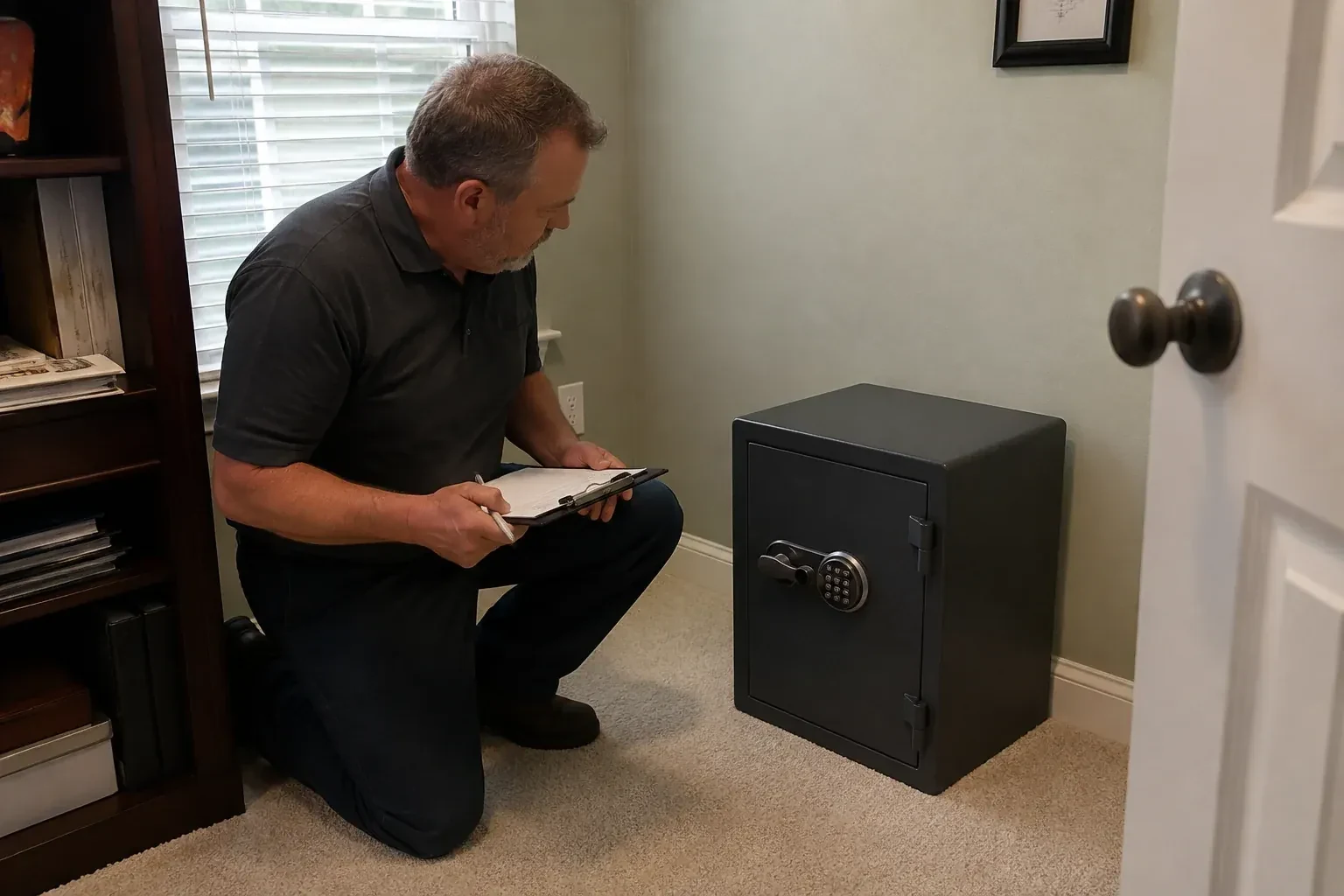
A dinner service ends with a stack of bills and a handful of credit slips, and right now they sit in an unlocked cash box on a shelf until morning, because nobody has gotten around to anything sturdier.
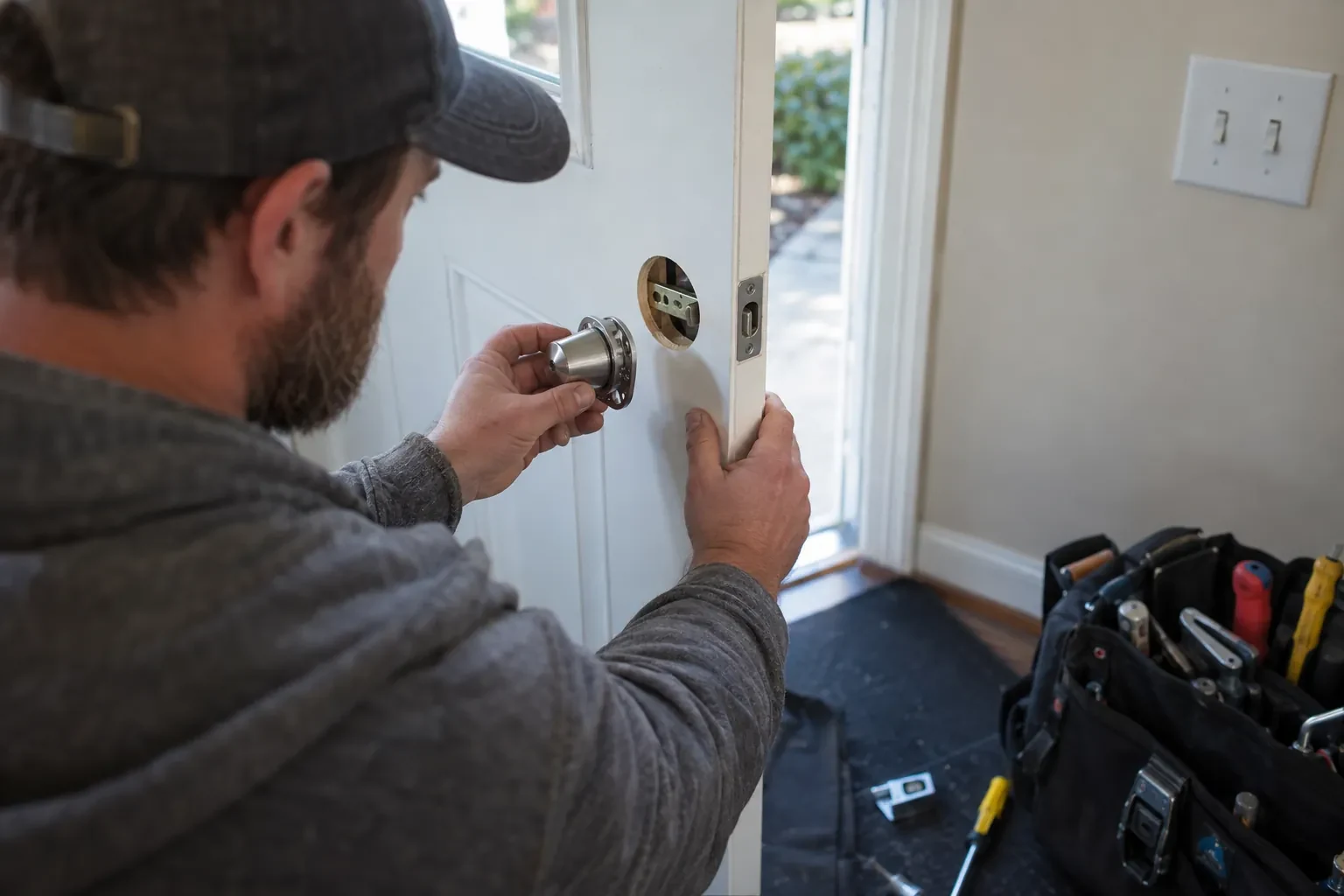
The lock on a safe is either a mechanical dial built around a wheel pack and gates, set and tested by a trained hand, or an electronic keypad running on batteries, and each has its own service needs. A new mechanical lock is set to a combination chosen by the owner and tested through a full open-and-close cycle before installation is called finished. An electronic lock gets fresh batteries, a reprogrammed code, and a check that the low-battery warning actually sounds before it dies. Either way, nobody but the owner leaves with the working combination or code.
Sound familiar?Crescent Harbour
Safe Installation & Servicing · Crescent Harbour
Scene 1
A commercial safe can weigh several hundred pounds before anything is inside it, so the route from the door to the final position matters as much as the safe itself. The locksmith measures doorways, hallway turns, stairs, and any tight corner along the path, and checks whether an elevator, loading dock, or ramp is involved. A safe that cannot clear a doorway in one piece, or a floor that struggles to bear that weight partway up a building, changes the plan before delivery day rather than becoming a problem on site.
Scene 2
On a concrete floor, holes are drilled through the safe's pre-cut anchor points with a hammer drill and a masonry bit sized to the anchor hardware, and the dust is cleared from each hole so the anchor seats fully rather than on loose grit. Concrete anchor bolts are driven in and torqued to the hardware manufacturer's specification, tight enough to resist prying but not so tight that the anchor or the safe's own steel is stressed. The safe is tested afterward by hand to confirm it does not rock or shift.
Scene 3
The model number, the burglary and fire ratings, and a note of how and where the unit was anchored are all details worth keeping on file, ideally somewhere other than locked inside the safe itself. An insurer asking about coverage for cash or valuables will often want exactly this information, and having it ready saves a search through old boxes later. A few photographs taken during installation, showing the anchoring and the rating label, cover most of what gets asked for afterward.
What shapes the quoteBell Ewart Lock Services
FeesSame any hour
In most cases, yes. The floor or wall behind it is checked the same way as for a new installation, anchor points on the safe itself are located, and hardware suited to that surface is fitted without needing to move the unit far from where it already sits. An older safe occasionally has anchor holes that were never used, which makes this part of the job simpler than starting from scratch.
Knowing roughly what the safe will store, whether it is a new purchase or an existing unit, and what floor or wall it will sit against covers most of what shapes the visit. If the safe is already on site, its approximate weight and dimensions help too, along with whether it currently has a working lock and combination. An insurer's stated rating requirement, if there is one, is worth mentioning as well.
It comes down to how much the amount being stored is likely to grow over the next few years. A safe sized with some room to spare avoids an early repeat visit, while a unit sized exactly for today's needs can be outgrown within a year or two for a growing business. Anchoring and lock work do not change much with size, so the main trade-off is simply the footprint the larger unit takes up in the room.
SimcoeOntario
Safe Installation & Servicing · Innisfil, Bell Ewart, Big Bay Point, Cedar Harbour, Cookstown, Innisfil Park, Killarney Beach, Leonards Beach, Nantyr Park, Stroud, Alcona, Alderslea, Bear Point, Belle Air Beach, Big Cedar Point, Cedar Mount, Churchill, De Grassi Point, Glenwood Beach, Lefroy, Mooselanka Beach, Peninsular Park, Sandy Cove, Tent City
Every square is one home in a hundred.
On-site assessment
A dinner service ends with a stack of bills and a handful of credit slips, and right now they sit in an unlocked cash box on a shelf until morning, because nobody has gotten around to anything…
(249) 315-0368, open 24/7.
On-site assessment preferred · (249) 315-0368, open 24/7